
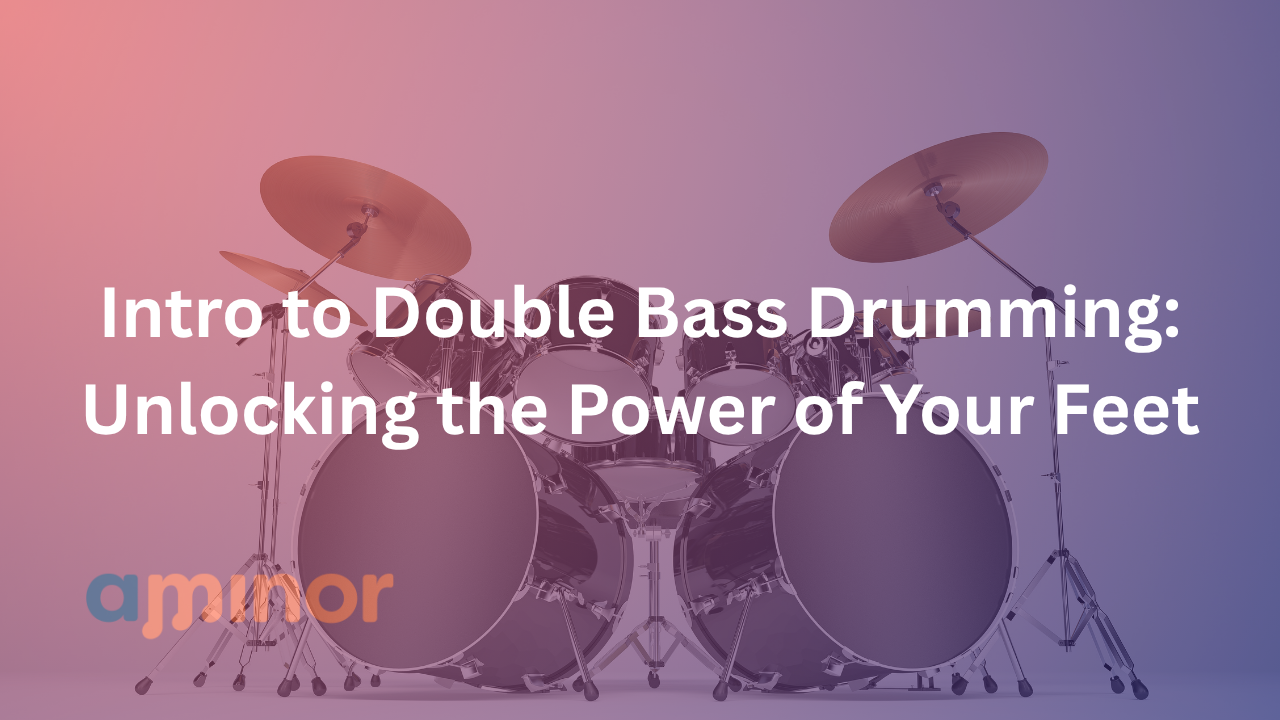
For decades, the thunderous roar of double bass drumming has powered some of the most iconic tracks in rock and metal. From the galloping rhythms of Iron Maiden to the relentless machine-gun drive of Metallica and Slayer, the sound of rapid-fire kick drums adds intensity, drive, and raw energy to music. If you’ve ever wanted to take your drumming beyond single-foot patterns, this intro to double bass drumming will set you on the right path. Today, we’ll explore what double bass drumming is, why it’s so effective, and give you a practical lesson to start your journey—learning to play alternating eighth notes with both feet.
What is Double Bass Drumming?
Double bass drumming is the art of using two bass drum pedals (either two separate bass drums or a double pedal attached to one drum) to create rhythmic patterns with both feet. Instead of relying on just one foot to provide the low-end pulse, drummers use both feet in alternation to create rapid sequences of notes.
This technique opens the door to countless musical possibilities:
- Speed: Faster patterns without burning out one leg.
- Endurance: Sharing the workload between both legs.
- Rhythmic variety: From simple pulses to complex syncopations.
- Power: That unmistakable wall of low-end sound.
While it’s most often associated with heavy metal, double bass drumming can be used in progressive rock, fusion, and even modern pop styles for added impact.
The Foundation: Alternating 8th Notes
Before you dive into blast beats or intricate polyrhythms, you need a solid foundation. That foundation starts with the simplest pattern: alternating eighth notes.
Think of it as your feet taking turns, one after the other, just like alternating strokes on a snare with your hands. The goal is to build consistency, balance, and stamina.
If you have a metronome, set it to a slow tempo (around 60–80 BPM) to begin.
Step 1: The Setup
- Make sure your seat height allows your legs to move comfortably.
- Adjust your pedals so both feet feel even and natural.
- Sit upright, relaxed, with your feet poised over the pedals.
Step 2: Right Foot First
Start by playing steady eighth notes with your right foot alone. Count:
“1 & 2 & 3 & 4 &”
Your foot should hit the bass drum cleanly and consistently on every count.
Step 3: Add the Left Foot
Now alternate between your right and left foot. The count stays the same, but the strokes will be split:
- Right foot on “1, 2, 3, 4”
- Left foot on the “&” counts
It looks like this in notation:
R L R L R L R L
So when you count:
- Right = “1, 2, 3, 4”
- Left = “&, &, &, &”
You’ve now created alternating eighths between both feet.
Step 4: Lock It in with the Hands
To really feel the groove, add your hands:
- Play a steady hi-hat on eighths (together with your bass drum pattern).
- Or, keep the hi-hat on quarter notes while alternating feet underneath.
This helps you develop independence and the ability to keep time.
Step 5: Build Speed Slowly
Don’t rush! Start at a slow tempo and make sure every note is:
- Even in volume.
- Consistent in spacing.
- Relaxed in motion.
Once you feel comfortable, gradually increase your tempo. The magic of double bass comes not from sloppily mashing pedals, but from smooth, even strokes that lock in with the rest of the band.
Practice Tips
- Stay relaxed: Tension in your legs or ankles will kill endurance.
- Small movements: Don’t stomp; let the pedal do the work.
- Balance both feet: Don’t let one dominate in volume.
- Use a metronome: It keeps you honest and builds consistency.
- Short sessions: Practice in bursts to build muscle memory without fatigue.
Where to Go Next
Once you’ve mastered alternating eighths, you can expand into:
- 16th notes: Two hits per foot per beat.
- Triplets: Perfect for gallop rhythms.
- Fills: Incorporating both feet into drum fills.
- Grooves: Syncing double bass with hand patterns for more advanced beats.
Bands like Pantera, Lamb of God, and Slipknot use double bass extensively—so listening and playing along to their tracks is a great way to push your skills further.
Final Thoughts
Double bass drumming can seem intimidating at first, but like any skill, it begins with small, steady steps. By practicing alternating eighth notes with your feet, you’ll lay the groundwork for speed, power, and versatility behind the kit. Remember, it’s not about how fast you can play right away—it’s about control, balance, and building up endurance over time.
So grab your pedals, fire up a metronome, and start alternating those eighths. Your feet will thank you, and your grooves will never sound the same again.
👉 Lesson Recap: Practice alternating 8th notes with both feet, starting slow and gradually building speed, using a metronome for timing.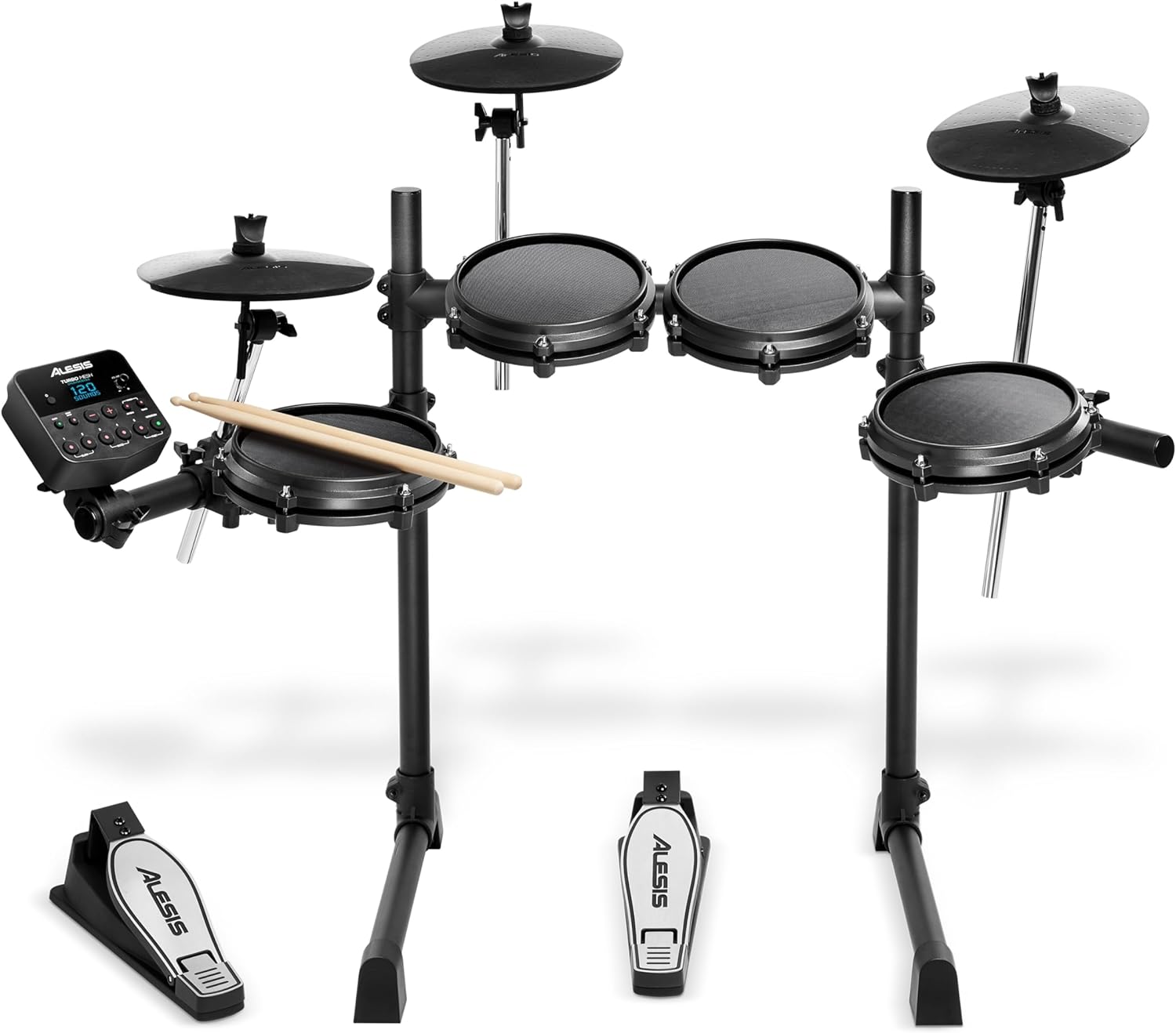
Alesis Turbo Mesh Kit – Electric Drum Set
If you’re excited to start learning grooves like “We Will Rock You” but don’t have access to a full acoustic drum kit, an electric drum set is an excellent solution. One highly recommended option for beginners and intermediate players is the Alesis Turbo Mesh Kit.
Key Features
- Mesh drum heads: These feel more natural and responsive than rubber pads, making practice more realistic.
- Quiet play: Perfect for home practice without disturbing neighbors or family.
- 120 built-in sounds + 30 play-along tracks: Great for learning famous grooves in different styles.
- Compact and affordable: A budget-friendly choice for those getting started.
Pros
✅ Realistic mesh heads feel closer to acoustic drums.
✅ Plug-and-play with headphones for silent practice.
✅ Includes drum coach and training features to help beginners improve.
Cons
⚠️ Kick pedal feels less authentic compared to higher-end kits.
⚠️ Limited expansion if you want to add extra pads.
Overall, the Alesis Turbo Mesh Kit is a fantastic starter set. It’s affordable, beginner-friendly, and versatile enough for practicing everything from “We Will Rock You” to more complex grooves.
👉 Check it out here: Alesis Turbo Mesh Kit – Electric Drum Set